The Real Estate Investor's Year-End Tax Checklist: What to Do Before December 31

Here’s the uncomfortable truth about tax planning: most of the moves that actually lower your bill have to happen before the year ends — not when you sit down to file in April.
By the time you’re handing documents to your CPA, the window to influence the outcome has mostly closed. The capital purchase you could have accelerated, the W-9 you could have collected easily, the cost segregation study you could have commissioned in time — those were December decisions, and December is gone.
This checklist is organized around that reality. Some items are hard deadlines tied to December 31. Others are cleanup that makes filing easier. All of them are things to handle now, while there’s still time for them to matter.
General education, not tax advice. Year-end moves are fact-specific and several depend on your particular situation. Work through this list with a qualified CPA before acting.
Why Year-End Is the Real Deadline, Not April
There are two kinds of tax work, and investors consistently confuse them.
Filing happens in the spring and is mostly reporting — documenting what already happened. By then, the tax year is closed and the facts are fixed.
Planning happens before December 31 and is where the outcome actually gets shaped. The difference between a large tax bill and a manageable one is usually decided in Q4, not at the filing deadline.
The items below fall into three buckets: hard deadlines that expire at midnight on December 31, cleanup that makes filing faster and cheaper, and decisions worth making deliberately before the year closes. Knowing which is which is the whole point.
Related: Real Estate Tax Planning: A Quarter-by-Quarter Execution Guide
1. Confirm Placed-in-Service Timing on Any New Property or Asset
This is the most time-sensitive item on the list, and the one with the hardest deadline.
Depreciation generally begins when a property or asset is placed in service — ready and available for its intended use — not when you bought it or paid for it. An appliance delivered and installed on December 28, or a unit made rent-ready that same week, may generate a depreciation deduction for this tax year. The same items in the first week of January generally don’t.
If you’re close to placing a property in service or installing qualifying assets, the calendar genuinely matters. A few days can move a deduction from this year to next.
Note that placed-in-service rules can differ by asset type and situation, so confirm the specifics with your CPA rather than assuming one rule covers everything.
Bucket: Hard deadline.
2. Decide on Year-End Capital Purchases — But Only If They Make Sense
Accelerating a planned purchase into December can pull a deduction into the current year — especially with 100% bonus depreciation permanently restored under the One Big Beautiful Bill Act for qualifying property.
But accelerating a purchase is still spending money. The question isn’t can I deduct this — it’s was I going to buy this anyway, and can I actually use the deduction this year?
That second part connects directly to the passive activity rules. If your rental losses are already going to suspend because you can’t use them against other income, generating more deductions by accelerating a purchase accomplishes considerably less than it appears to. The deduction doesn’t vanish, but it may not help you this year the way you expected.
Make this a deliberate decision, not a reflexive year-end spending spree.
Bucket: Decision.
Related: Passive Income Real Estate: What It Actually Means and How It’s Taxed
3. Collect W-9s From Every Contractor You Paid
This is the single highest-leverage administrative task in Q4, and the one most commonly ignored until it’s painful.
If you paid contractors, property managers, or unincorporated service providers during the year, you likely have 1099 filing obligations coming in January. Collecting a W-9 before year-end — ideally before you ever issued payment — takes two minutes. Chasing a contractor for their tax ID in late January, against a filing deadline, with a worker who has no incentive to respond, can take weeks and sometimes fails entirely.
Go through the year’s contractor payments now and confirm you have a W-9 on file for everyone who might cross the reporting threshold. Note that the threshold itself changed — it rose from $600 to $2,000 for payments made after December 31, 2025 — so confirm which threshold applies to the year you’re filing for.
Bucket: Cleanup that prevents a January scramble.
Related: What Is a 1099 for Rental Property? Everything Landlords Need to Know
4. Make Your Cost Segregation Decision While There’s Still Time
A cost segregation study reclassifies building components into shorter depreciation lives, and combined with 100% bonus depreciation, can generate a substantial current-year deduction. But studies take time to commission and complete.
Deciding in October or November leaves room to have the study reflected in this year’s return. Deciding in late December is tight. Deciding in February means you’re having a look-back conversation instead — still valuable, but no longer a current-year planning move.
The same caution from item #2 applies: a large cost seg deduction only helps this year if you can actually use the loss it creates. Settle the “can I use it” question before commissioning the study, not after.
Bucket: Decision with a practical deadline.
Related: Cost Segregation 101
5. Do a Final REPS Hour Check
If you’re claiming Real Estate Professional Status this year, December is when you confirm you’ve actually met both tests — more than 750 hours in real property trades or businesses, and more than half your total working time in those activities — and that your log is complete, contemporaneous, and specific.
This is a confirmation step, not a catch-up step. Reconstructing a log in December for hours you didn’t record throughout the year is exactly the kind of documentation that fails under scrutiny — courts have consistently rejected after-the-fact logs even when the underlying work was genuine. What December is for is making sure the records you’ve been keeping all year are complete and that you’ve genuinely cleared both thresholds.
If you’re short, it’s better to know now and plan accordingly than to discover it at filing.
Bucket: Confirmation.
Related: Real Estate Professional Status (REPS): The Complete 2026 Guide
6. Review Your Q4 Estimated Tax Payment
Your Q4 estimated payment is generally due in mid-January, but the taxable income it’s based on is set by what happens before December 31. Reviewing your year-to-date position now tells you whether your estimated payments have kept pace with your actual liability — and whether a property sale, a large deduction, or a strong income year has shifted the number.
Underpayment penalties are calculated as interest on what you should have paid each quarter. The safe harbor rules — generally paying a set percentage of last year’s or this year’s liability — are the protection most investors don’t use simply because they don’t know their current-year number. You can’t make an accurate final estimate from books that stopped being current in the summer.
Bucket: Cleanup with a January deadline.
7. Reconcile and Close Your Books Through December 31
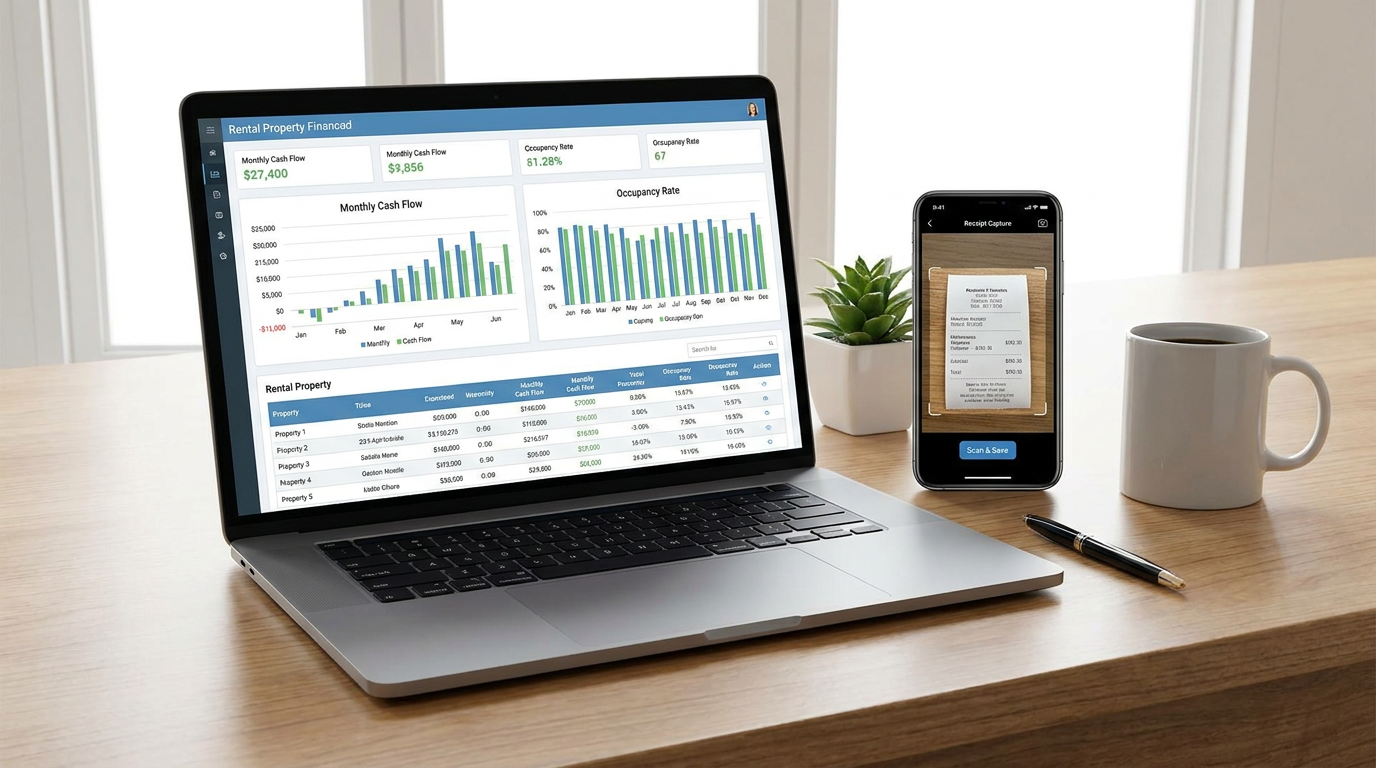
Everything above depends on this one.
You can’t confirm your estimated payment, decide on a capital purchase, or hand your CPA clean books if your records stopped being current months ago. Reconciling every account through December 31 — confirming every transaction is captured, categorized to the right property and entity, and that capital improvements are recorded as basis additions rather than buried in a repairs bucket — is what makes the entire rest of this checklist executable.
Done in the first week of January, this turns tax prep into a handoff. Deferred until March, it becomes a reconstruction project billed by your CPA at their hourly rate.
Bucket: The foundation everything else sits on.
Related: Repairs vs. Capital Improvements: The IRS Distinction That Can Cost You Thousands
8. Run a Full Portfolio Review Before the Year Closes
Beyond the tax mechanics, year-end is the natural moment to look at the portfolio as a whole and make the strategic decisions that are easiest to execute at a year boundary.
Which properties over- or underperformed against what you projected? Is your entity structure still right for the portfolio’s current size, or has it outgrown the structure you set up two acquisitions ago? Are there properties worth considering for a sale or a 1031 exchange in the coming year — and if so, do you know your suspended loss balances and recapture exposure before making that call? Entity changes and major strategic decisions often make the most sense effective at the start of a new year, which means the thinking happens now.
Bucket: Decision — best made at the year boundary.
Related: How to Manage Finances Across Multiple LLCs
The Year-End Checklist at a Glance
| Item | Bucket | Deadline |
|---|---|---|
| 1. Confirm placed-in-service timing | Hard deadline | Dec 31 |
| 2. Decide on capital purchases | Decision | Dec 31 |
| 3. Collect W-9s from contractors | Cleanup | Before January |
| 4. Make your cost segregation decision | Decision | Practically, by December |
| 5. Final REPS hour check | Confirmation | Dec 31 |
| 6. Review Q4 estimated payment | Cleanup | Set by Dec 31, paid mid-January |
| 7. Reconcile and close your books | Foundation | Through Dec 31 |
| 8. Run a full portfolio review | Decision | Year boundary |
What This Checklist Requires From Your Records
Read back through the eight items and notice how many depend on the same thing: knowing your actual numbers, by property, as of right now — not reconstructed in the spring.
You can’t confirm your estimated payment without a current year-to-date income figure. You can’t decide on a capital purchase without knowing whether you can use the deduction. You can’t reconcile through December 31 if your books have been sitting untouched since June. The entire checklist is executable in proportion to how current your records are.
Penny, RealBooks’ AI bookkeeper, connects to your accounts and categorizes transactions to the correct property and expense category as they post — so when year-end arrives, your books are already current rather than needing a months-long catch-up before any of these decisions can be made.
Dollar Bill tracks cost basis and capital improvements as they happen, which keeps the depreciation decisions in items #1, #2, and #4 grounded in accurate numbers.
Uncle Sam maintains depreciation schedules per property and generates the year-to-date reports your CPA needs to evaluate estimated payments, cost segregation, and portfolio decisions before the year closes.
For investors across multiple entities, each keeps its own books with a consolidated view — which is exactly what the portfolio review in item #8 depends on.
RealBooks organizes your records so these year-end moves can be made on real numbers. It doesn’t file your return or provide tax advice — that’s your CPA’s role, and this checklist works best as a shared one.
Related: Real Estate Bookkeeping: The Complete Guide
The Takeaway
The investors who walk into April with a manageable tax bill aren’t the ones who found something clever at filing time. They’re the ones who did the work in Q4 — confirmed their timing, made deliberate decisions about purchases and studies, collected their W-9s, verified their status, and closed their books clean.
Every item on this list has one thing in common: it’s far easier and far more valuable to handle before December 31 than after. The window is open now. It closes at midnight on the 31st.
Your numbers should work as hard as your investments do.
Walk into tax season with books already closed — not a reconstruction project waiting in the spring.
Start a Free Trial → · See How It Works →
This article is for general educational purposes and reflects general investor guidance. It does not constitute tax, legal, or accounting advice, and no particular tax result is promised or implied. Deadlines shift when dates fall on weekends or holidays, and year-end strategies are fact-specific. Confirm current dates and your situation with a qualified CPA.
Ready to maximize your tax savings?
RealBooks automatically tracks expenses, manages assets, and calculates depreciation across your entire portfolio.
Start Free Trial →