Florida Property Tax Discount: How to Track Every Parcel and LLC So You Never Miss It

Florida pays you to pay your property taxes early. Most states don’t.
If you pay in November, you generally get a 4% discount. On one rental with a $6,000 tax bill, that’s $240. On twelve properties across four LLCs, it can add up to thousands of dollars a year that you keep just by paying on time.
The discount itself is easy. The hard part is tracking it. Every parcel gets its own bill, each LLC pays its own taxes, and the discount drops a percentage point every month. Miss a bill buried in the wrong inbox and the savings go away without anyone noticing.
Here’s how the discount works and how to make sure you get it on every parcel.
General education, not tax advice. Check current dates and amounts with your county tax collector and a qualified CPA.
How the Florida Early Payment Discount Works
Florida property tax bills generally go out around November 1. Under Florida Statute 197.162, the discount shrinks the longer you wait:
| Pay in | Discount |
|---|---|
| November | 4% |
| December | 3% |
| January | 2% |
| February | 1% |
| March | None (full amount due) |
Taxes are generally due by March 31. Payments after that are delinquent and can lead to penalties, interest, and eventually a tax certificate sale on the parcel.
The math is simple. Paying in November and not March saves 4% of the bill, about four months early. Few uses of short-term cash pay that well with no risk.
One option worth knowing: Florida also offers an installment program where you pay in four quarterly installments with smaller built-in discounts. Enrollment usually has a spring deadline. Ask your county tax collector if it fits your cash flow better than one November payment.
Why Investors Miss It
Owning one home, you see one bill and pay it. A portfolio is different.
Every parcel is billed separately. A duplex, a vacant lot, and a fourplex in the same county are three bills, sometimes with different mailing addresses.
Bills go to the owner of record. If a property sits in an LLC, the bill goes to that LLC’s address on file. Change your registered agent or office address and the notice can end up somewhere nobody checks.
Escrow hides it. If your lender escrows taxes, they usually pay for you, but not always in November. Confirm with each lender when they pay. Don’t assume you’re getting the 4%.
Multiple counties, multiple calendars. Each county runs its own tax collector site and payment portal.
Payment has to come from the right entity. Paying an LLC’s taxes from your personal account or another LLC’s account is commingling. It muddies your books and can weaken the liability protection the LLC exists for.
None of this is hard. It’s just a lot of separate items, and that’s where the discount slips away.
The Parcel-and-Entity Tracking System
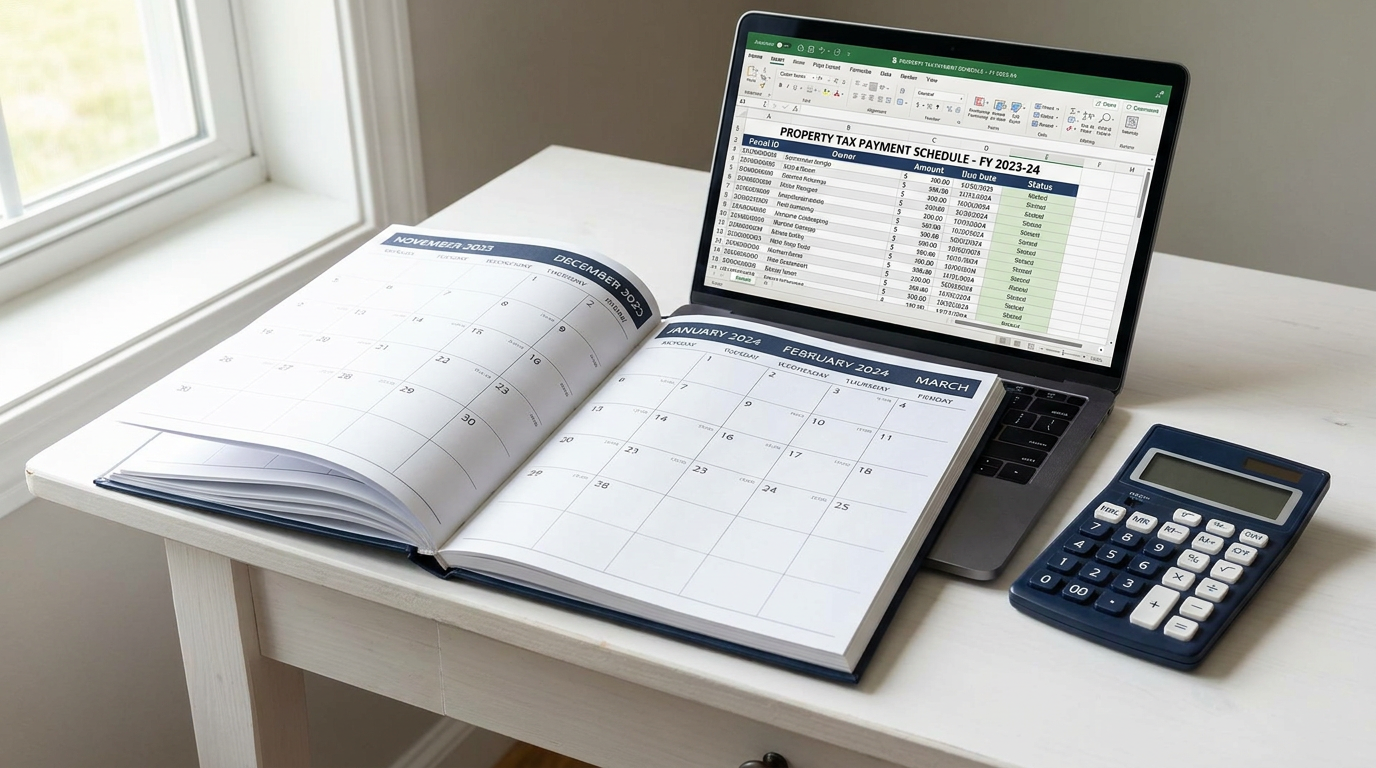
Build one master list before November and keep it current. For each parcel, track:
- Parcel ID (folio number) and property address
- County and that tax collector’s payment portal
- Owning entity (which LLC, or you personally)
- Bank account the payment comes from (that entity’s account only)
- Escrowed or not, and if escrowed, when the lender pays
- Mailing address on file with the county
- Bill amount, date paid, and discount received
Then put four dates on your calendar:
- Late October: confirm the mailing address on every parcel and that each entity’s account has the cash
- Early November: pull every bill from county sites, even if you never got a paper copy
- By November 30: pay every non-escrowed parcel to lock in 4%
- Early December: check that escrowed parcels were actually paid, and when
The last column, discount received, is the one that pays off. After one year you’ll know exactly what the system saved you and which parcels slipped.
Getting the Accounting Right
Paying early doesn’t change what you deduct. A few things to get right:
Deduct what you actually paid. If you paid $5,760 on a $6,000 bill after the 4% discount, the deductible property tax expense is generally $5,760, not $6,000.
Book it to the right property and entity. Property taxes go on each property’s Schedule E line. If a property is in a multi-member LLC, it goes on that entity’s return.
Watch the year it falls in. A November payment generally counts in that calendar year for a cash-basis taxpayer. Confirm the timing with your CPA, especially if you’re also planning other year-end moves.
Prorations at closing. If you bought or sold a property this year, part of the tax was likely split at closing. Make sure the closing statement amounts are recorded so you don’t double-count or miss part of the deduction.
Related: What Is Schedule E? The Rental Property Tax Form Every Landlord Needs to Understand
A Note on Assessments
Paying early saves you a percentage. Your assessed value decides what the percentage applies to.
Rental properties don’t get Florida’s homestead exemption or its 3% Save Our Homes cap. Non-homestead residential property generally has its own annual assessment increase cap, usually 10% on the non-school portion of the tax, which resets when the property sells.
Each August, counties mail a TRIM notice (Truth in Millage) with the proposed value. If a parcel’s value looks wrong, that notice is when you can appeal, before the bill is set. So the TRIM notice is worth adding to your tracking list too.
What This Takes From Your Books
The discount is worth the most to investors with the most parcels, and they’re the ones most likely to miss a bill. What fixes it is knowing every parcel, its entity, its account, and its payment status in one place.
Penny, RealBooks’ AI bookkeeper, categorizes every tax payment to the right property and entity as it posts, so you can see which parcels are paid and which aren’t.
Dollar Bill keeps each property set up with its entity and cost basis from the day you acquire it, including closing prorations.
Coming soon: Uncle Sam will organize property taxes into per-property, Schedule E-ready reports your CPA can work from directly.
Each LLC keeps its own books, and you see the whole portfolio from one login. That’s the view you need when November bills arrive.
RealBooks organizes your records. It doesn’t pay your property taxes or give tax advice. Your county handles payment and your CPA handles advice.
Related: How to Manage Finances Across Multiple LLCs · The Real Estate Investor’s Year-End Tax Checklist
The Takeaway
Florida’s early payment discount is easy money if you pay in November. Most investors who miss it aren’t choosing to. A bill went to the wrong address, an escrow paid late, or one parcel out of twelve got lost.
Build the parcel list, tie each one to its entity and account, check your escrows, and pay before November 30. Do it once and it runs every year after.
Your numbers should work as hard as your investments do.
Every parcel, every LLC, every tax payment in one place.
Start a Free Trial → · See How It Works →
This article is for general educational purposes. It does not constitute tax, legal, or accounting advice, and no particular outcome is promised or implied. Florida property tax dates, discounts, and assessment rules may change and county procedures vary. Confirm current details with your county tax collector and a qualified CPA.
Ready to maximize your tax savings?
RealBooks automatically tracks expenses, manages assets, and calculates depreciation across your entire portfolio.
Start Free Trial →