The Look-Back Study: How to Recover Years of Missed Depreciation Without Amending Your Tax Returns

Most cost segregation content is written for investors about to close on a property. Almost none of it is written for the much larger group: investors who already own several, have never run a study, and assume the opportunity has passed them by.
It hasn’t. The IRS allows a look-back study — a cost segregation analysis performed years after a property was placed in service — that lets you claim the accelerated depreciation you missed as a single catch-up deduction in the current year. No amended returns. No reopening prior filings.
If you’ve owned a rental for three, five, or ten years and never had a study done, this is the piece that applies to you.
General education, not tax advice. Look-back studies and Form 3115 filings are technical and fact-specific. Work with a CPA experienced in cost segregation before filing.
Why You Don’t Need to Amend Anything
Normally, fixing a prior-year tax position means amending that year’s return — and amended returns are generally limited to a lookback window of a few years, with each year corrected separately.
A look-back cost segregation study works differently. It’s treated as a change in accounting method, filed on Form 3115, which allows the entire cumulative catch-up — potentially covering every year you’ve owned the property — to be claimed as a single adjustment under IRC Section 481(a) on your current-year return.
That’s the mechanism that makes this valuable regardless of how long you’ve owned the property. A study on a property purchased eight years ago isn’t limited to the last three years of missed depreciation. It can capture the full cumulative difference, all at once, this year.
How the Catch-Up Is Calculated
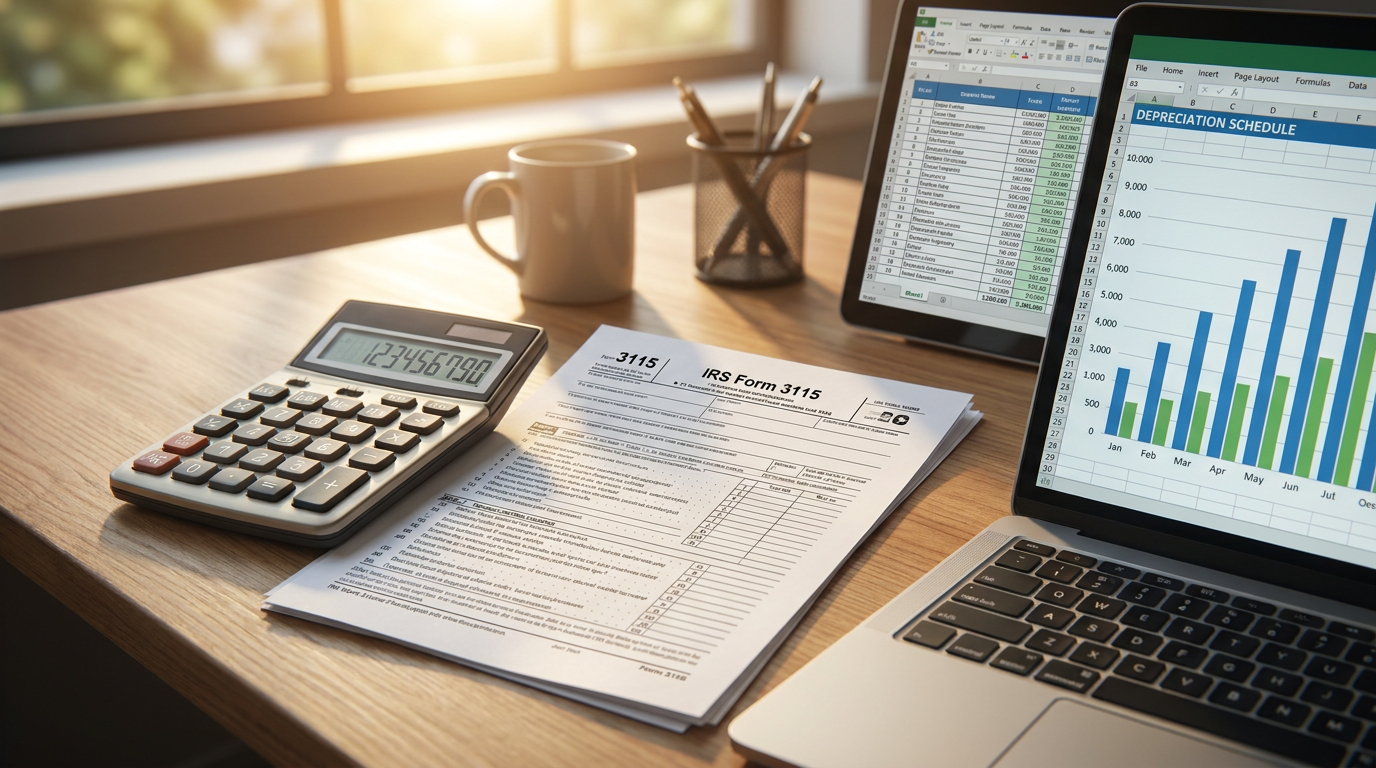
The study examines the property as if the cost segregation analysis had been performed the year it was placed in service, then calculates two numbers:
- What you actually claimed — straight-line depreciation over 27.5 years, every year since purchase.
- What you should have been entitled to claim — with building components properly reclassified into 5-, 7-, and 15-year categories from day one.
The difference between those two cumulative totals is your Section 481(a) adjustment — claimed in full, in the current tax year.
A simplified illustration: You bought a $450,000 rental four years ago. Straight-line depreciation has produced roughly $13,000 per year, or about $52,000 claimed to date. A look-back study determines that with proper component reclassification, you should have claimed approximately $95,000 over those same four years. The $43,000 difference is claimed as a single catch-up deduction this year — on top of your normal current-year depreciation.
Specific numbers depend entirely on the property, its components, and when it was placed in service. This is illustrative only.
Why 2026 Makes This Especially Worth Doing
The catch-up adjustment itself isn’t new — it’s been available for years. What changed is the law governing the components it reclassifies.
The One Big Beautiful Bill Act permanently restored 100% bonus depreciation for qualifying property acquired after January 19, 2025. For properties placed in service before that date, the applicable bonus depreciation rate generally follows the rules in effect in the placed-in-service year — which may be lower, or may not apply to a look-back claim the same way. This is a detail that genuinely depends on your specific placed-in-service date and should be confirmed directly with your CPA before assuming full 100% treatment applies to an older property.
What’s consistent either way: even without full bonus depreciation, reclassifying components into shorter recovery periods accelerates deductions meaningfully faster than the standard 27.5-year schedule — the look-back opportunity exists independent of the bonus depreciation question.
Who This Is For
A look-back study is generally worth evaluating if:
- You’ve owned the property for at least one full tax year
- Your depreciable basis is roughly $200,000 or more (the general threshold where studies tend to pay for themselves)
- You’ve never had a cost segregation study performed on the property
- You have taxable income this year the catch-up deduction can offset — or you qualify under one of the paths that make rental losses usable against other income
That last point matters as much here as it does with a new-acquisition study. A large catch-up deduction only helps this year if you can actually use the loss it creates. If your rental losses are passive and you don’t qualify for the $25,000 allowance, the short-term rental rule, or Real Estate Professional Status, the deduction may suspend rather than offset current income.
What a Look-Back Study Requires
The process mirrors a standard cost segregation study, with a few additions specific to the catch-up:
- Property records from the placed-in-service date forward — the original purchase price, closing statement, and any capital improvements made since
- Prior depreciation schedules — exactly what’s been claimed each year, to calculate the cumulative difference
- Component-level analysis — the same engineering or engineering-based review used in any cost segregation study
- Form 3115 preparation — filed by your CPA with your current-year return, including the Section 481(a) adjustment
The second item is where investors most often run into friction. If your depreciation records are incomplete, inconsistent, or scattered across old tax returns, reconstructing exactly what was claimed in each prior year becomes its own project before the study can even begin.
What This Depends On in Your Records
Everything about a look-back study hinges on one thing: knowing precisely what depreciation was claimed, year by year, since the property was placed in service.
Investors who’ve kept clean, property-level depreciation records can hand a CPA or cost segregation firm an accurate starting point immediately. Investors who haven’t often spend more time reconstructing historical figures than the study itself takes to complete.
- Uncle Sam, RealBooks’ AI tax strategist, maintains a running depreciation schedule per property and per asset from the moment a property is added to the platform — which means the “what have I claimed so far” question behind every look-back study has an answer on demand, not a multi-year reconstruction project.
- Dollar Bill tracks cost basis and every capital improvement made since acquisition, which matters directly here — improvements made after the original purchase often have their own components worth reclassifying in the same study.
- Penny keeps the underlying property-level income and expense records current, so the broader financial picture behind the catch-up decision is accurate and ready whenever you decide to act.
RealBooks organizes your depreciation records. It doesn’t perform the cost segregation study, prepare Form 3115, or provide tax advice — that’s your CPA and a qualified cost segregation provider. What organized records change is how fast and how accurately that process can start.
The Takeaway
If you’ve owned rental property for years and assumed cost segregation was something you missed your window on, the look-back study is the mechanism that says otherwise. A Form 3115 filing and a Section 481(a) adjustment let you claim the full cumulative difference between what you claimed and what you were entitled to — in a single current-year deduction, with no amended returns required.
The opportunity doesn’t expire. What determines whether it’s worth pursuing is whether you can use the loss it creates, and whether your records are clean enough to calculate it accurately. Get both right, and a property you bought five years ago can still generate a meaningful deduction this year.
Know exactly what you’ve claimed on every property — so a look-back study starts with answers, not archaeology.
Start a Free Trial · See How It Works
This article is for general educational purposes and reflects general investor guidance. It does not constitute tax, legal, or accounting advice, and no particular tax result is promised or implied. Look-back studies, Form 3115 filings, and Section 481(a) adjustments are technical and fact-specific. Consult a qualified CPA and cost segregation professional regarding your situation.
Ready to maximize your tax savings?
RealBooks automatically tracks expenses, manages assets, and calculates depreciation across your entire portfolio.
Start Free Trial →