CPA for Real Estate Investors: When You Need One, What They Do, and How to Get the Most Out of It

You own a few properties. Tax season is a scramble of logins, bank statements, and a spreadsheet you swear you updated. And somewhere in the back of your mind is the question you never quite answer: do you actually need a CPA, or a bookkeeper, or software, or all three?
This post gives you a straight answer. By the end, you’ll know whether a CPA is worth it for your situation, when to hire one, what a real estate CPA actually does, roughly what they cost, and the exact questions to ask before you sign on.
One idea runs through everything here. A CPA is only as good as the data you hand them. The investors who get the most value don’t show up in April with a shoebox. They show up with clean, property-level numbers they’ve kept current all year.
Keep that in mind as we go. It changes every decision that follows.
Do Real Estate Investors Need a CPA?
Not every real estate investor needs a CPA. But most benefit from one once they own multiple properties, use entities like LLCs, or run strategies with real tax complexity such as depreciation, cost segregation, or 1031 exchanges.
That’s the honest answer. The rest of this section is about helping you place yourself on that line.
The confusion usually comes from blurring three different roles that do three different jobs. Get these straight and the “do I need a CPA” question mostly answers itself.
A bookkeeper records transactions. Their job is to capture what happened: this expense went to that property, that deposit was rent, this check was a roof repair. They keep the record clean and current.
Software organizes and automates that data. Good software does the recording for you, categorizes transactions, assigns them to the right property, and produces reports you can actually read. It’s the engine room that keeps the books moving without you touching every line.
A CPA interprets the data, plans strategy, and signs off on your return. They make judgment calls on gray-area deductions, structure your entities, time your sales, and stand behind the numbers when the IRS asks questions. That’s a different skill entirely from recording a transaction.
Here’s the trap. Investors often think they’re choosing between a CPA and software. They’re not. The real question is how the two work together.
Who Can Usually Self-File With Software Alone
Some investors genuinely don’t need a CPA yet, and there’s no shame in that. If you own a single long-term rental, file a straightforward Schedule E to report income or loss from rental real estate, and have no entity structure, modern tax software can carry you.
In that scenario your return is simple. One property. Predictable income. Standard deductions. Depreciation that follows a basic schedule. You don’t need a strategist to tell you what to do, because there aren’t many strategic decisions to make.
The thing that makes this work is your data. Even the simplest self-filer wins when their numbers are clean. If you’ve tracked every deductible dollar by property all year, filing a Schedule E is a review, not a reconstruction.
Who Usually Should Bring in a CPA
The picture changes the moment complexity enters. You should strongly consider a CPA for real estate investors if any of the following describe you:
- You own multiple properties, especially across different markets or states.
- You hold property inside LLCs, partnerships, or any multi-entity structure.
- You run fix-and-flip or BRRRR strategies with renovation costs and short holding periods.
- You’re claiming accelerated depreciation or considering a cost segregation study.
- You’re doing a 1031 exchange to defer gains into your next deal.
Each of those introduces decisions software can’t make for you. Is this renovation a repair you deduct now or a capital improvement you depreciate? Should this property sit in its own LLC or share one? Is your 1031 timeline on track to avoid a surprise tax bill? Those are judgment calls, and judgment is exactly what you’re paying a CPA for.
A bookkeeper tells you what you spent. Software tells you where it went. A CPA tells you what to do about it.
So the decision isn’t CPA versus software. It’s building a system where your software and your books feed a CPA who can actually use them. The investors who thrive treat the data they hand their CPA as the foundation of the whole relationship, not an afterthought they assemble in a panic.
Once you’ve decided a CPA is likely worth it, the next question is the obvious one: when, exactly, do you bring one on?
When Should a Real Estate Investor Hire a CPA?
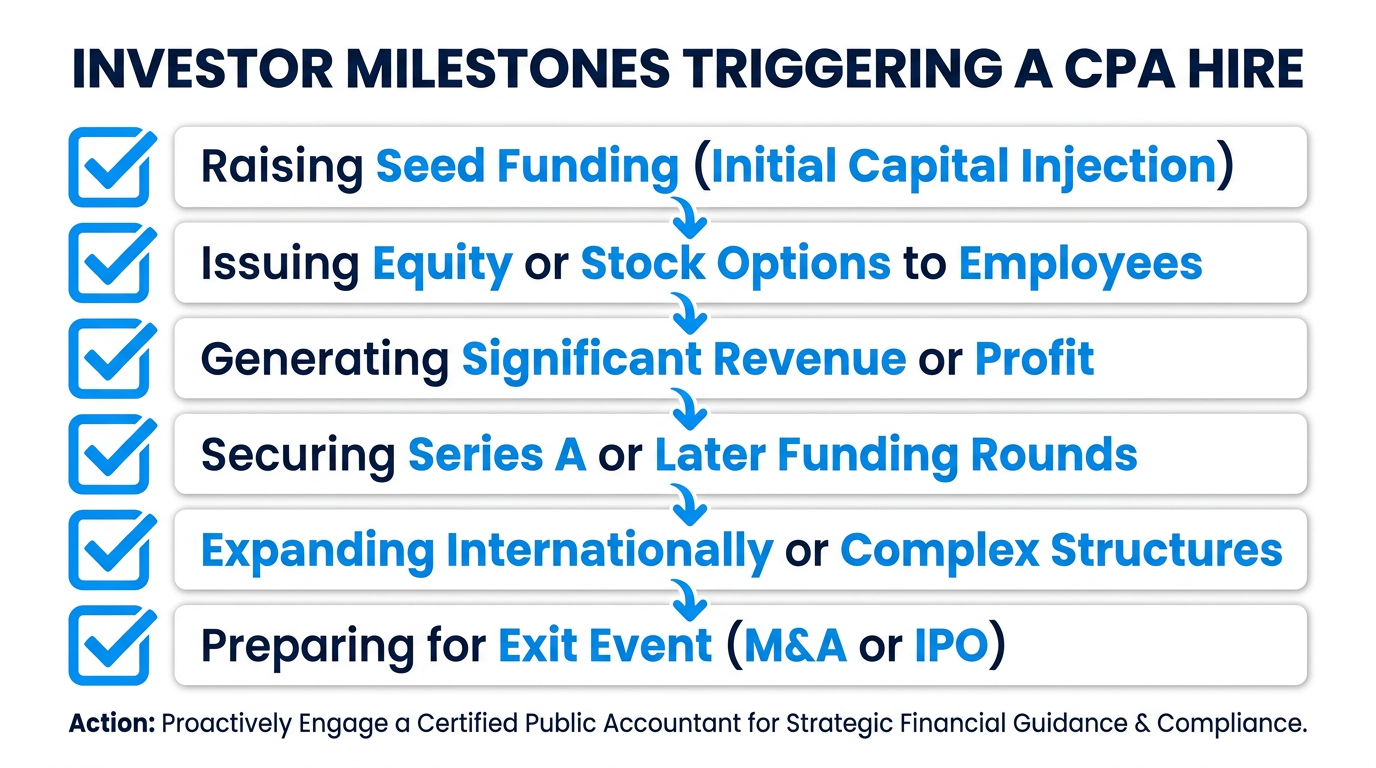
Hire a CPA when your tax situation outgrows a simple return. In practice, that usually means the moment you add a second property, form an entity, start renovating, or sell a property with a gain.
And here’s the part most people get backward. Many of the best-served investors bring a CPA on before their first tax season with rentals, not after their first messy one. They engage early so the numbers are shaped the right way from day one.
Let’s make “outgrows a simple return” concrete. These are the specific triggers that signal it’s time.
The Triggers Worth Watching For
- Buying your second or third property. One property is a line item. Three is a portfolio, with separate P&Ls, separate depreciation, and more ways to get it wrong.
- Forming an LLC or partnership. The moment you have an entity, you have entity-level decisions about structure, distributions, and how income flows to your personal return.
- Your first fix-and-flip or BRRRR cycle. Flips are often treated as ordinary income, not capital gains, and the tax treatment differs sharply from a buy-and-hold rental. That surprise is expensive if nobody warns you.
- A 1031 exchange. The deadlines are strict and unforgiving. A missed window can turn a deferred gain into a taxable one overnight.
- Claiming real estate professional status. This is one of the most powerful and most scrutinized positions in the tax code, governed by IRS Publication 925 on passive activity and at-risk rules. It can unlock significant loss deductions, and it’s precisely the kind of gray area where professional guidance pays for itself.
- Any year you sell. A sale triggers capital gains, depreciation recapture, and timing decisions that are far easier to manage with a plan than to clean up after the fact.
If you check even one of these boxes, it’s a reasonable moment to start the conversation.
Why Timing Is About Planning, Not Just Filing
Here’s the difference that most investors underestimate. A CPA hired in December can only report what already happened. A CPA engaged earlier in the year can actually shape the outcome.
Think about what that means in practice. Engaged early, a CPA might tell you to close a property sale in January instead of December to shift the gain into a new tax year. They might flag that a renovation should be structured to maximize first-year deductions. They might restructure an entity before a deal closes rather than after, when your options have narrowed.
By April, all of those doors are shut. You can describe what you did, but you can’t change it. That’s the whole case for hiring sooner.
If You’re Telling Yourself “I’ll Just Do It Myself”
Let’s be fair to the DIY instinct. It’s not wrong, and it’s not lazy. Software can carry you a long way on bookkeeping and organization, and for a simple portfolio it may be all you need.
But software doesn’t make judgment calls. It won’t tell you whether a deduction is aggressive or safe. It won’t weigh whether an S-Corp election makes sense for your flipping business. It won’t negotiate the gray areas where the tax code says “it depends.” That’s the line where a human expert earns their fee.
The deeper point is this: tax prep is an all-year practice, not a year-end scramble. When your expenses are captured in real time and tied to the right property as they happen, you’re never reconstructing a year in a weekend. You’re handing over records that are already ready. December stops being a cliff.
Knowing when to hire one gets much easier once you understand what a real estate CPA actually handles day to day.
What Does a Real Estate CPA Do?
A real estate CPA plans and files your taxes with real estate rules in mind. That includes depreciation, cost segregation, passive activity limits, entity structuring, and 1031 exchanges. The best ones work on strategy year-round, not just filing in April.
That’s a lot bigger than “does my taxes.” Let’s break the role into the services that actually move the needle.
The Core Services, in Plain Terms
Tax planning and projections. Before the year ends, a good CPA runs the numbers on where you’ll land and what levers you can still pull. This is the proactive work that saves the most money.
Depreciation and cost segregation guidance. Depreciation lets you deduct the cost of a building over time. Cost segregation accelerates that by breaking a property into components that depreciate faster, pulling deductions forward into your early years of ownership. A CPA helps you decide when it’s worth doing and how to apply the results.
Entity structure advice. Should a property sit in its own LLC? Does an S-Corp election make sense for your flipping income? These decisions affect liability, taxes, and how clean your books stay. A CPA who knows real estate has an opinion grounded in your actual strategy.
1031 exchange coordination. A 1031 like-kind exchange lets you defer capital gains by rolling proceeds from one investment property into another. The rules are strict and the clock is short. A CPA coordinates the moving parts so you don’t blow a deadline and trigger the tax you were trying to defer.
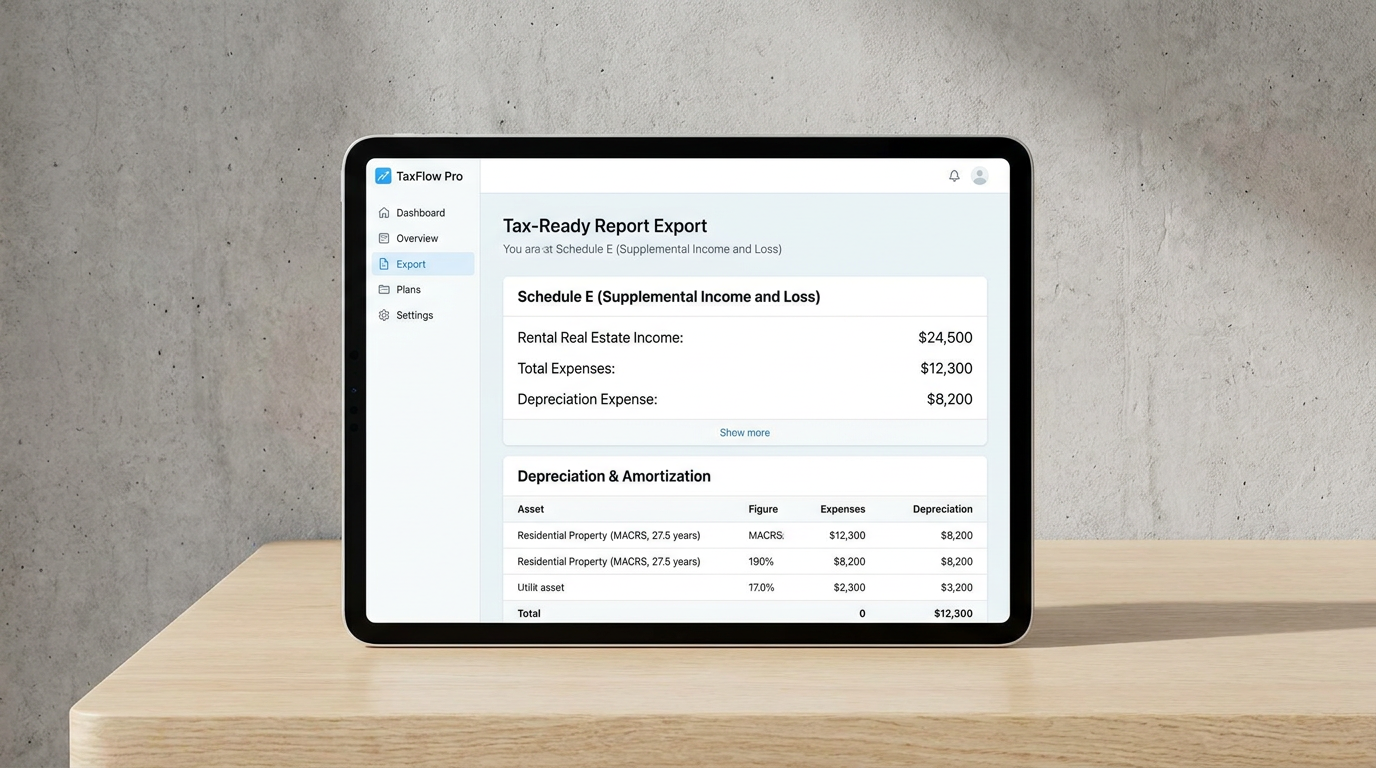
Return preparation and filing. The deliverable most people picture: the actual Schedule E, Form 4562, and whatever else your situation requires, prepared correctly and filed on time.
Audit support. If the IRS has questions, your CPA is the one who answers them. Having someone who prepared the return and understands the positions you took is worth a great deal when a letter arrives.
Why “Real Estate Specialized” Matters
A general CPA can file your taxes. A real estate specialized CPA understands the asset class in their bones.
Real estate has its own rhythms. Depreciation schedules spanning decades. Depreciation recapture when you sell. Passive activity rules that can trap your losses. The sharp line between repairs and capital improvements. The phases of a flip versus the steady state of a rental. A specialist has seen all of it, many times, across many clients.
That experience shows up as faster answers, fewer missed opportunities, and far less “let me research that and get back to you.” For an asset class this rule-heavy, specialization is not a luxury. It’s the point.
What a CPA Usually Does Not Do
Here’s a boundary worth knowing. A CPA typically does not handle your ongoing transaction categorization or your month-to-month bookkeeping.
That’s not what you hire them for, and frankly, it’s an expensive way to buy data entry. Recording transactions, tagging them to the right property, and keeping the ledger current all year is the job of your software and, if you use one, your bookkeeper. The CPA sits on top of that clean record and does the thinking.
A CPA turns clean data into a strategy. They can’t fix messy books in April.
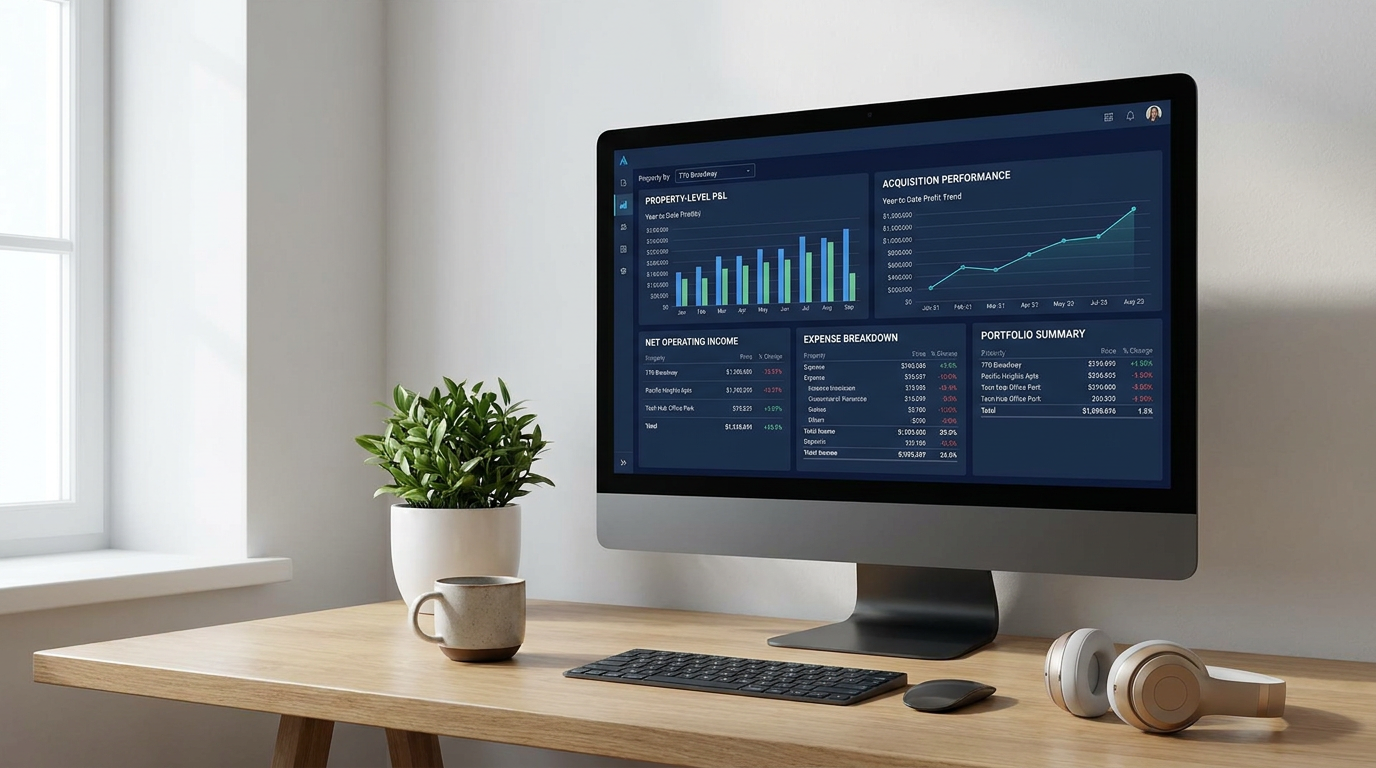
This is exactly where modern tools change the equation. In RealBooks, an AI tax strategist named Uncle Sam watches your transactions year-round, handles depreciation and cost segregation math, and generates tax-ready reports your CPA can act on immediately. Think of the software as your CPA’s supply line, not their replacement. It delivers the clean, organized numbers; the CPA delivers the judgment.
Once you understand everything a real estate CPA does, the next question becomes unavoidable: what does all of this cost?
How Much Does a CPA Cost for Real Estate Investors?
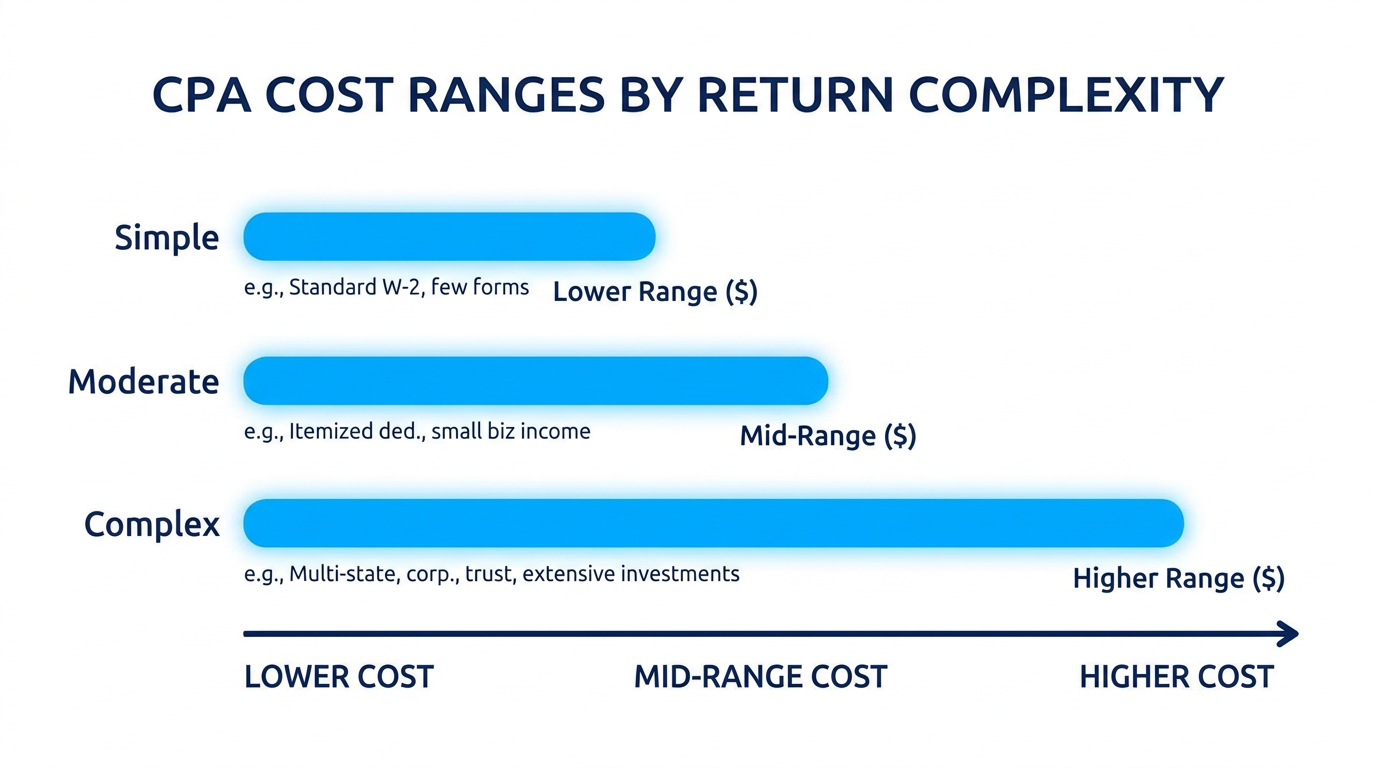
Most real estate CPAs charge roughly $150 to $450 per hour. A typical investor return runs from a few hundred dollars for a simple filing to a few thousand for multi-property, multi-entity returns with planning. The big thing to understand up front: price tracks complexity, not property count alone.
These are general industry ranges. They vary by region, firm, and your specific situation, so treat them as a budgeting guide rather than a quote.
The Common Pricing Models
Real estate CPAs tend to bill in one of three ways, and knowing which you’re signing up for helps you compare apples to apples.
- Hourly. You pay for time at a set rate. This is common for one-off questions, cleanup work, and situations that are hard to scope in advance. It rewards you for showing up organized, because every hour the CPA spends untangling your records is an hour you pay for.
- Flat per-return. A fixed fee for preparing and filing your return. You know the cost going in, which makes budgeting easy. Complexity still matters, because a multi-entity flat fee will naturally be higher than a single-rental one.
- Ongoing advisory or retainer. A recurring arrangement for year-round planning, projections, and access. This is where proactive strategy lives, and for investors with real complexity it’s often where the biggest savings come from.
What Actually Drives Your Bill Up
Complexity is the cost driver, and it compounds. The following all push your fee higher:
- More entities. Each LLC, partnership, or S-Corp is often its own return or its own layer of work.
- More states. Properties across state lines mean more filings and more rules to navigate.
- Fix-and-flip activity. Short holds, ordinary income treatment, and renovation accounting add moving parts.
- 1031 exchanges. Coordination, basis tracking, and strict timelines all take professional hours.
- Cost segregation studies. Valuable, but they add analysis and filing complexity.
- Messy or incomplete records. This is the big one, and it’s the only item on the list fully within your control.
The Clean-Data Payoff Is Real Money
Here’s the lever most investors overlook. When you hand over organized, property-level books, your CPA spends fewer hours cleaning up data, and you pay for fewer of those hours.
Flip it around. Every hour your CPA spends reconstructing your year from bank statements and guesswork is billed at $150 to $450. A pile of uncategorized transactions is, quite literally, money you’re handing over for work you could have automated. Good software that keeps your books current year-round can meaningfully lower your CPA bill, because it eliminates the most expensive part of the engagement: the cleanup.
That’s why the smart framing isn’t just cost. It’s return. The value of a good CPA shows up in deductions identified that you’d have missed and penalties avoided that you’d have paid. For many investors, the fee is small next to what’s found. None of this is financial advice for your specific situation, but as a general principle, the math usually favors competence.
One more practical note: verify who you’re paying. You can confirm a preparer’s credentials in the IRS Return Preparer Office directory before you hand anyone your financial life. And the cleaner your underlying records, the less any of this costs, because clean data comes from a well-kept general ledger that’s already organized by property.
Once you know roughly what it costs, the goal shifts to making sure you pick someone genuinely worth it.
What to Look For When Choosing a Real Estate CPA
Look for a CPA who specializes in real estate, understands your specific strategy, communicates with you year-round, and works cleanly with digital records. Those four traits separate an advisor who grows your wealth from a preparer who just files a form.
Let’s turn that into something you can actually screen for.
The Selection Criteria That Matter
- Real estate specialization and client mix. Ask what share of their clients are real estate investors. You want someone who lives in Schedule E and Form 4562, not a generalist who sees a rental return twice a year.
- Strategy fit. A CPA who’s brilliant with long-term rentals may not be fluent in short-term rental rules, flips, or BRRRR. Match their expertise to how you invest.
- Proactive planning versus reactive filing. The best CPAs reach out before year-end with moves to make. The weakest ones only appear when a return is due. You want the former.
- Comfort with your entity structure. If you have multiple LLCs or partnerships, make sure they handle that routinely, not reluctantly.
- Responsiveness. When you have a time-sensitive question about a deal, do they answer in days or weeks? In real estate, timing is money.
- Fee transparency. A good CPA explains their pricing model clearly and up front. Vagueness here tends to predict vagueness everywhere.
- Tech compatibility. Can they work smoothly with your bookkeeping system and accept clean digital exports? A CPA who insists on paper or can’t handle modern reports will slow you down and cost you more.
Verifying Credentials Is Quick and Worth It
Trust, but verify. Confirming a CPA’s standing takes minutes.
Start by confirming the license and reviewing professional guidance like the AICPA’s resource on how to choose a CPA, which walks through what to check and why. You can also look the preparer up directly in the IRS directory mentioned earlier. A legitimate professional will welcome the scrutiny, not bristle at it.
Red Flags to Walk Away From
Some signals should end the conversation. Be wary of a CPA who shows no interest in your records, promises you a specific refund number before seeing your books, communicates slowly, or treats the relationship as a strictly once-a-year transaction.
That last one deserves emphasis. A CPA who only wants to see you at filing time has, by definition, opted out of the planning work where most of the value lives. For a growing portfolio, that’s a poor fit.
Pick Someone Who Can Scale With You
Finally, think ahead. The CPA who’s right for three doors should still be right for thirty. Choose someone whose capacity, systems, and expertise can grow with your portfolio, so you’re not shopping for a new advisor the moment you hit ten doors. Switching advisors mid-growth is disruptive and expensive. Pick for where you’re going, not just where you are.

Once you know what to look for, the final step is to walk into that first conversation with the right questions.
Questions to Ask Before You Hire a Real Estate CPA
The right questions reveal, fast, whether a CPA actually specializes in real estate and plans year-round. Ask about their investor clients, their planning cadence, and how they want your books delivered. Their answers will tell you most of what you need to know.
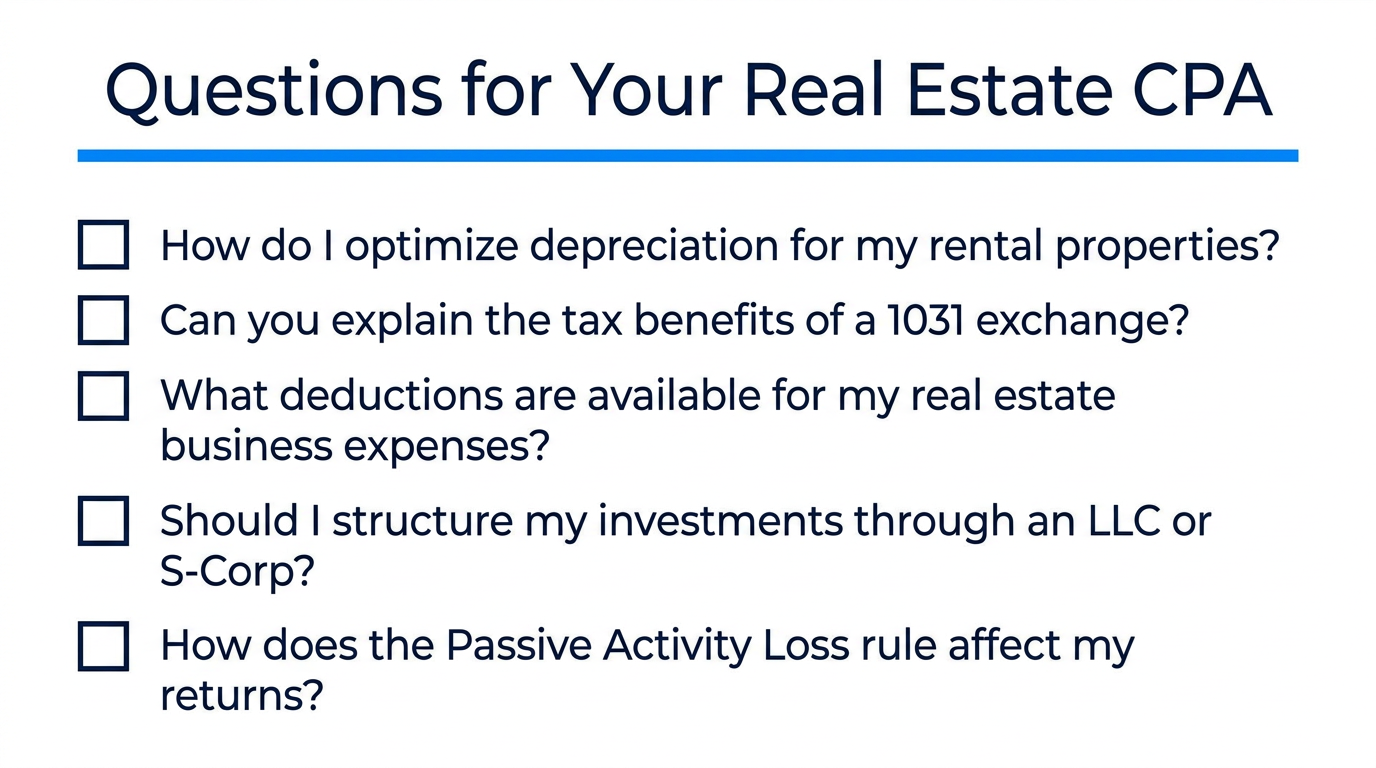
Here’s a script you can bring to the interview. Screenshot it if you like.
The Questions, and What a Good Answer Sounds Like
- How many real estate investor clients do you work with? A strong answer is a specific, substantial number with examples of portfolios like yours. A weak answer is vague.
- Do you handle depreciation and cost segregation? You want a confident yes, with a clear explanation of when they recommend a study and when they don’t. Hesitation here is a problem.
- Have you coordinated 1031 exchanges? Look for someone who’s done several and can describe the timeline pitfalls from memory. This isn’t a place for on-the-job training.
- How do you advise on entity structure? A good CPA ties their answer to your goals, not a one-size-fits-all template. Beware anyone who pushes the same structure on everyone.
- Do we meet during the year or only at filing? The answer you want is some version of “we plan throughout the year.” A once-a-year relationship means you’re buying compliance, not strategy.
- How do you prefer to receive my financials? The best answer is a clear, organized format and a comfort with digital exports from your bookkeeping system. If they want a box of receipts, keep looking.
- What are your fees and billing model? You want transparency: hourly, flat, or retainer, stated plainly, with a sense of what drives the number up.
- How do you handle an audit? A reassuring answer describes their process for standing behind your return and representing you. Audit support should be part of the relationship, not a surprise add-on.
Tie It All Back to Your Books
Notice the pattern running through these questions. Specialization, planning cadence, and how your data gets delivered. The third one is the one you control.
The better your records, the shorter and cheaper every one of these conversations gets. When your financials arrive clean and property-level, a CPA can spend the meeting on strategy instead of asking you to explain a mystery charge from March. If you want a head start on what that deliverable should look like, your bookkeeping system should produce tax-ready reports a CPA can open and act on immediately, and the RealBooks blog is a useful place to keep learning between tax seasons.
With the questions in hand, the last piece is the thing that makes the whole relationship actually work.
The Real Answer: It Was Never CPA or Software
The decision was never CPA versus software. It was always both, working together.
A CPA brings the judgment and the strategy: the entity calls, the timing moves, the gray-area deductions, the signature on your return. Your books and your software bring the clean, property-level data that makes all of that strategy possible. Take either side away and the other can’t do its best work.
So here’s the practical takeaway, in three lines. Hire a specialist when complexity shows up: a second property, an entity, a renovation, a sale. Ask the right questions so you pick someone who plans, not just files. And keep your numbers current all year so April is a review, not a rescue.
Your numbers should work as hard as your investments do.
If you want your CPA conversations to be shorter, cheaper, and more strategic, start with clean books. RealBooks keeps every expense tied to the right property and your reports tax-ready year-round, so the person you’re paying $150 to $450 an hour spends that time on strategy instead of cleanup. See how it works at realbooks.io.
And if you know an investor who dreads tax season every single year, do them a favor and send this their way.
Start a Free Trial → · See How It Works →
This article is for general educational purposes and reflects general investor guidance. It does not constitute tax, legal, or accounting advice, and no particular financial or tax outcome is promised or implied. Consult a qualified professional regarding your specific situation.
Ready to maximize your tax savings?
RealBooks automatically tracks expenses, manages assets, and calculates depreciation across your entire portfolio.
Start Free Trial →